投稿
投稿




荷兰:绿色之墅
来源:网友半糖投稿 2019-08-19
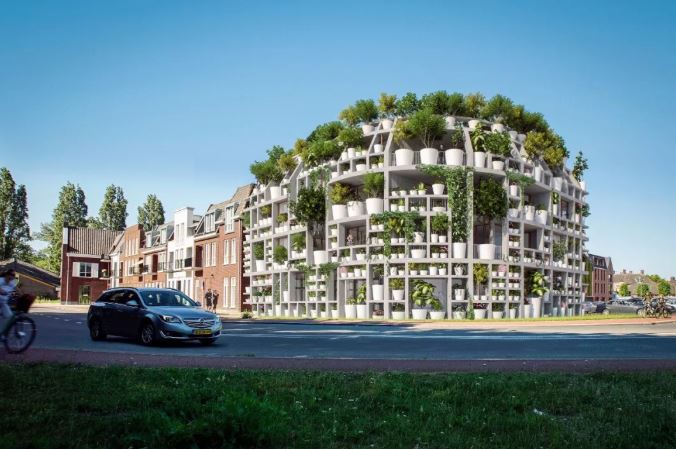
MVRDV在荷兰小村Sint-Michielsgestel、多梅尔河边的街角空地设计了一个小型的办公和住宅建筑。该项目网格状的“花架”系统置满了多种植物,包裹了建筑的整个外部。这座四层的“绿色之墅“沿用了附近建筑的形态,与此同时,植物的覆盖使这幢位于村落南部边缘的小楼与不远处的河流、田野和树木组成的自然景观融合在一起。
MVRDV has designed a small office and residential building on a corner lot next to the Dommel river in the Dutch village of Sint-Michielsgestel, using a gridded “rack” system to cover the building’s entire exterior in a variety of plants. Located on the town’s southern edge, the four-storey Green Villa adopts the urban form of the neighbouring buildings, while the plant covering helps it blend into the bucolic landscape of the nearby river, fields and trees.
图/Image: MVRDV
绿色之墅的立面由一系列不同高度的混凝土“花架”组成,“花架”上安放了品种丰富的植物,灌木和树木
The façade of the Green Villa features a "rack" of concrete shelves of varying depths hosting an abundance of potted plants, bushes, and trees
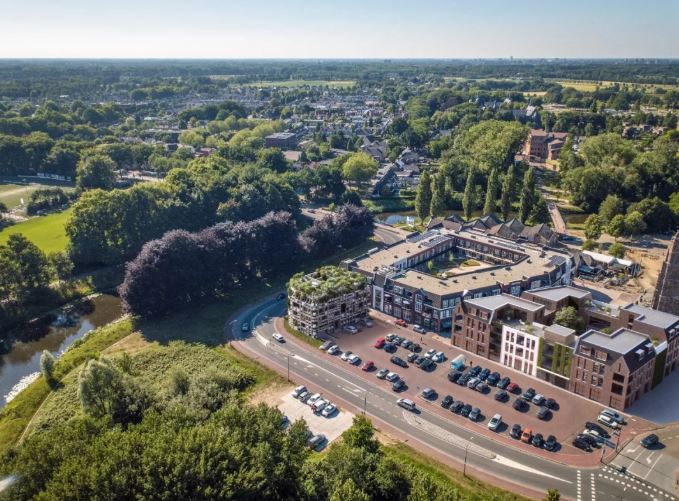
绿色之墅位于Sint-Michielsgestel村庄南部边缘一个地面停车场的转角处,一层将作为该项目业主Stein的新办公空间,二至四层共有五套公寓,地下为停车库。业主Stein希望新建筑既能体现他们对开发高品质项目的追求,同时展示公司的社会责任感和环境保护意识。
Containing a new office space for the project’s developer, Stein, on the ground floor, five apartments on three floors above, and underground parking, the Green Villa develops one end of a surface car park on the southern edge of Sint-Michielsgestel. As their new office, Stein wanted a building that demonstrated their commitment to projects that are high quality while also being socially conscious and environmentally progressive.
图/Image: MVRDV
植物的覆盖使这幢位于村落南部边缘的小楼与不远处的河流、田野和树木组成的自然景观融合在一起
The Green Villa adopts the urban form of the neighbouring buildings, while the plant covering helps it blend into the bucolic landscape
MVRDV与合作建筑事务所Van Boven Architecten联合设计的方案延续了该街道临街建筑的形式,采用了当地老建筑常用的孟莎式屋顶。然而,即使沿用了过去的形态, “绿色之墅”使用的材料与街道上的其他建筑截然不同:不同的高度的“花架”上安放了品种丰富的盆栽植物,灌木和树木:如连翘,茉莉,松树和桦树。这种设计方案源于MVRDV的理念:可持续发展不仅是技术上的挑战,而且意味着生活方式的积极改变,即城市将被视为自然景观的一部分。
The design developed by MVRDV and co-architects Van Boven Architecten continues the formation of the street frontage on Adrianusplein, adopting the mansard roof shape of the previously constructed buildings. Within this shape, however, the Green Villa diverges drastically from the other buildings on the street in its materiality; a “rack” of shelves, of varying depths, hosts an abundance of potted plants, bushes, and trees such as forsythias, jasmine, pine, and birch. This approach stems from MVRDV’s belief that sustainability implies not only a technological challenge, but also a positive change in lifestyle, with urban areas considered as a part of the natural landscape.
“这个设计是我们研究‘无立面’建筑和激进型绿化的延续。” MVRDV联合创始人Winy Maas解释道:“90年代那种将公园作为城市绿洲的想法有一定的局限性。我们需要一个彻底的‘绿色浸染’——正如研究机构The Why Factory在其同名著作中所述,我们也应该在屋顶和高层建筑的立面覆盖绿色植物。植物和树木可以帮助我们抵消二氧化碳的排放,为城市降温,并且促进生物多样性。”
"This design is a continuation of our research into ‘facade-less’ buildings and radical greening”, explains Winy Maas, founding partner of MVRDV. “The idea from the nineties of city parks as an oasis in the city is too limited. We need a radical ‘green dip’: as will be shown soon in a book by The Why Factory with the same title, we should also cover roofs and high-rise facades with greenery. Plants and trees can help us to offset CO2 emissions, cool our cities, and promote biodiversity.”
图/Image: MVRDV
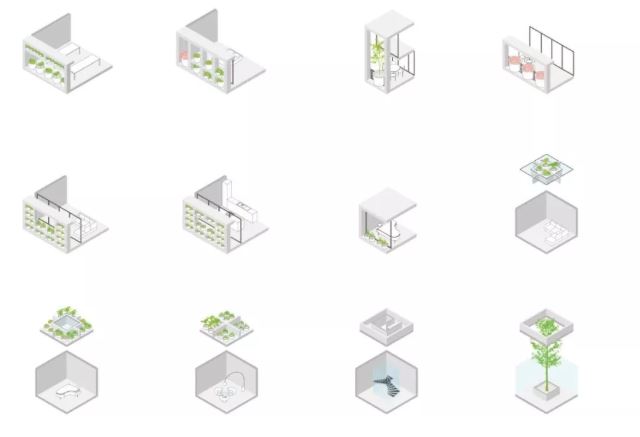
MVRDV设计了一系列可以放置在网格中的空间模块,比如卧室模块和客厅模块
MVRDV developed a catalogue of varying space modules, such as bedrooms and living spaces, to place within the structural grid
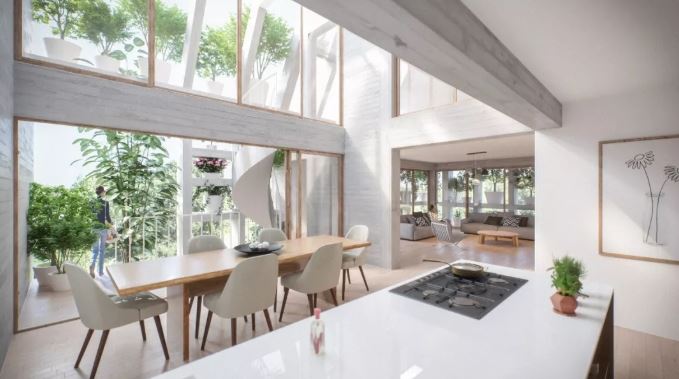
绿色之墅的结构由方形网格展开,每个网格四开间宽三开间深。MVRDV设计了一系列可以放置在网格中的空间模块,比如卧室模块和客厅模块。立面成为了一个三维植物园,它拥有类似的系统目录,提供多种植物和树木的选择,记录了每种植物的名称和详细信息。植物种类的选择和放置考虑了立面朝向和生活功能,满足了保护隐私、遮阳及观景的需求。“花架”还包含了一个传感器控制的灌溉系统,利用储存的雨水保证一年四季立面常绿。
The structure of the Green Villa is based on a square grid four bays wide and three bays deep. MVRDV developed a catalogue of varying space modules, such as bedrooms and living spaces, to place within the grid. A similar catalogue is used to populate the façade, resulting in a three-dimensional arboretum, a plant and tree library, complete with nameplates and additional information. The plant species are selected and placed with consideration of the façade orientation and the living functions behind, providing either privacy, shade, or views as required. A sensor-controlled irrigation system that uses stored rainwater has been incorporated into the planters, guaranteeing a year-round green facade.
图/Image: MVRDV
植物种类的选择和放置考虑了立面朝向和生活功能,满足了保护隐私、遮阳及观景的需求
The plant species are selected and placed with consideration to the living functions behind, providing either privacy, shade, or views as required
这座别墅是Winy Maas与Van Boven Architecten建筑事务所创始人Theobert van Boven一同完成的第二个项目。2016年,他们合作设计了同样坐落在这个小村庄的Beekvliet体育馆扩建方案,因为这里曾是Winy和 Theobert上学的地方。“绿色之墅是我个人的项目,因为我曾在Sint-Michielsgestel村庄上学,” Winy Maas补充道:“就像我以前在家乡斯海德尔设计了‘玻璃农庄’,我回到了度过我青春的地方。我也很高兴再次与Theobert合作。”
The villa is the second project in which Winy Maas has worked with Theobert van Boven, the head of Van Boven Architecten. In 2016, they were jointly responsible for the design of the expansion of the local Gymnasium Beekvliet, where they both attended school. “The Green Villa is also a personal project, because I went to school in Sint-Michielsgestel”, adds Maas. “Just like I did before with the Glass Farm, in my native village Schijndel, I am returning to the region of my youth. It is nice to work with Theobert again.”
绿色之墅的业主为开发商Stein,项目计划于2020年开工。
The Green Villa was designed for developer Stein. Construction is scheduled to start in 2020.

发表评论
最新评论